
All I Know is I Think I’m Losing My Mind: Is This Perimenopause, ADHD or Both?

Earlier this year the U.S. Food and Drug Administration lifted warnings that had been on hormone therapy for menopause symptoms for over 2 decades. This has spurred a surge in visibility and discussion of perimenopause on social media, at primary care offices, and in women’s friend groups and families. What used to be a taboo topic is now (thankfully) being ushered into the light and talked about with more candor and less stigma.
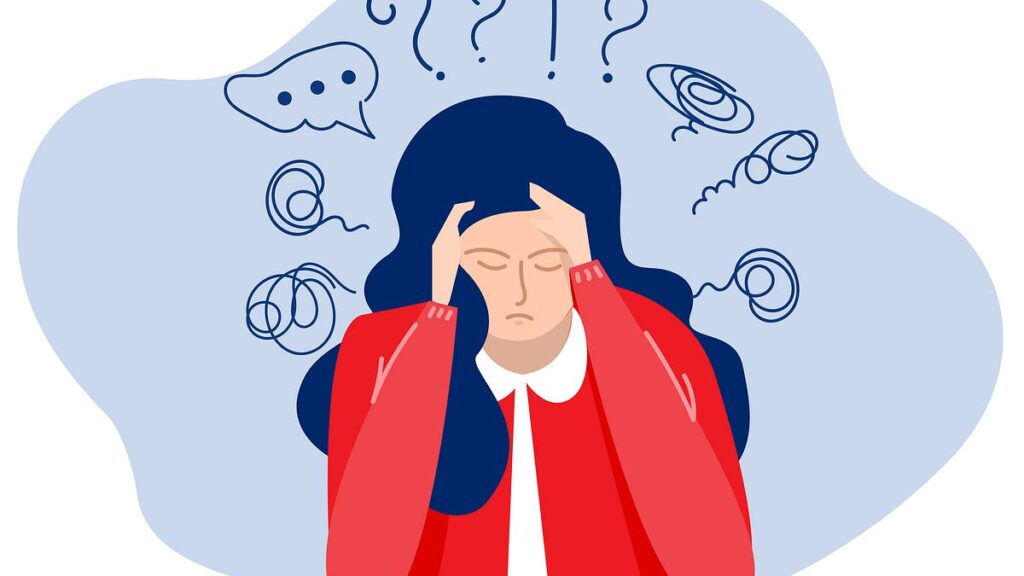
“In the last 5 years or so we have increasingly heard women asking, “Is this perimenopause, ADHD or both – because I feel like I’m going crazy!” As women share their experiences and feel less alone in this season of life, they are asking more questions than ever about the cognitive and emotional impacts of perimenopause, why and how these symptoms look and sometimes feel so similar to neurocognitive disorders like ADHD, and what they can do about them.
Symptoms in Common
Women are right! The drop in estrogen during perimenopause causes real effects in cognition and emotions, and many of the symptoms of ADHD and perimenopause look and feel very similar. Both ADHD and perimenopause can cause difficulties with memory, organization and planning, heightened emotional experience and responding, and restlessness. And although the cognitive fog, mood and anxiety challenges that often accompany perimenopause aren’t a direct symptom of ADHD, many individuals with ADHD experience these challenges as well, secondary to ADHD. Additionally, over half of individuals with ADHD report ongoing sleep troubles, and 40-80% of women in perimenopause also report sleep difficulties. That is a lot of overlapping symptoms and experiences!
There are important differences, however, in the symptom profiles of ADHD versus menopause. For instance, there are subtle but important differences in memory weaknesses. Memory difficulties with ADHD tend to be more around working memory and encoding new information and are most often evenly experienced across verbal and non-verbal tests. Perimenopause can also affect working memory and attention, but has a more specific impact on verbal memory and verbal fluency (e.g., remembering lists, names, recalling words). There are also differences in the onset and course of executive functioning, emotion regulation and sleep challenges seen in ADHD versus perimenopause.
So, although the cognitive, emotional and executive functioning symptoms of ADHD and perimenopause overlap a great deal, with a good evaluation, you can gain clarity that puts you on a path to deal with either, or both, much more effectively.
Women: Understudied and Underdiagnosed
One aspect that makes women wonder, ‘is this perimenopause or has this just been ADHD all along’, is the fact that girls and women are far less likely to be accurately diagnosed with ADHD. In fact, 50 – 75% of girls and women with ADHD go undiagnosed or are misdiagnosed. Girls’ and women’s ADHD symptom profiles have historically been far less studied and are different than their male counterparts. Girls and women tend to exhibit more inattentive symptoms (versus attention-grabbing hyperactive behaviors), and are often mistakenly labeled as anxious, depressed, or ‘difficult/disordered’ personality patterns. Thus, the likelihood a girl with ADHD makes it through adulthood and into perimenopause without being accurately diagnosed is actually pretty high.
A woman who was not accurately diagnosed with ADHD in their childhood has likely been masking or compensating for their ADHD challenges with other strengths (e.g., high intelligence, impressive social skills, over-planning) for decades, is likely finding herself less likely to mask as she crosses the threshold into perimenopause. The added pressure that the hormone and brain changes associated with perimenopause put on women often outweigh their ability to compensate or mask. Many women are finding out in middle age that yes, it has been ADHD all along, and perimenopause and menopause is making it worse!
Correct Diagnosis
The correct diagnosis is everything when it comes to managing ADHD or perimenopause, or both. The good news is that when we engage in standardized testing of executive functioning and memory, and complete an in depth neurodiagnostic interview, the profiles of ADHD alone, perimenopause alone and ADHD + perimenopause look different! This is incredibly helpful and important because accurate diagnosis puts us on the path to effective supports and treatment. Women with ADHD, menopause or both do not have to continue to mask symptoms and quietly suffer.
Integrated Treatment
An integrated treatment approach in which a woman’s medical provider and mental health provider are working in concert is ideal. Many of the symptoms associated with perimenopause can be alleviated with an integration of medical care and evidence-based treatment like Cognitive Behavioral Therapy (CBT) and/ or Acceptance and Commitment Therapy (ACT). Additionally, CBT is the most effective treatment for ADHD by far – so for those experiencing both ADHD and perimenopause – CBT can be life changing.
Empowering Girls and Women at all stages of life
At Monarch Behavioral Health we leverage our knowledge of well-conducted research to empower girls and women to get the care they need and deserve throughout their lives. With accurate diagnoses and evidence-based care, girls and women can move through all stages and phases of life with a sense of pride and well-being.
Make an appointment today: https://www.mbh-mi.com/make-an-appointment/
Recent Comments